
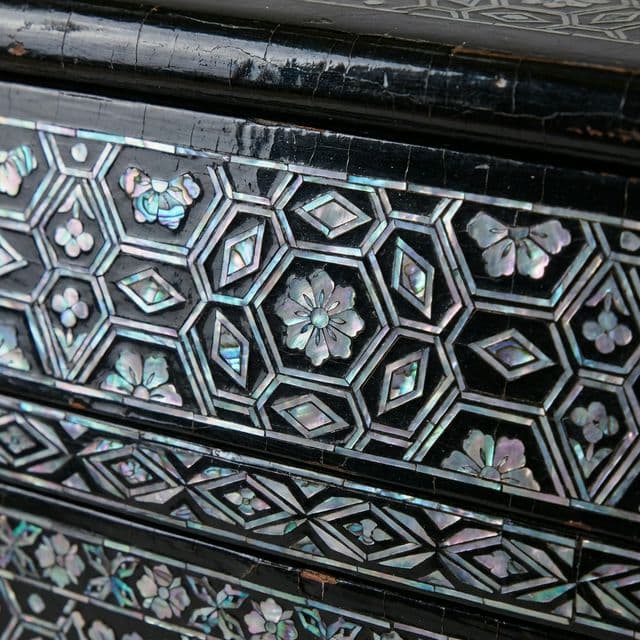
화개
hwagae · 華蓋
The Canopy Star (화개살)
Hwagae, the Canopy Star, marks a pull toward the inward and the aesthetic: art, scholarship, religion, and the things that are done away from a crowd. It is read from your day or year branch and lands on the storage position of your trine group. It is the most common of the identity stars, appearing in around three charts in five — and the trait it describes is often experienced by others as distance.
Do you have it? The free calculator lists the stars in your chart.
Check my chart — free →How it is found in a chart
Read from your day branch or year branch
Each trine group ends in a storage branch — 辰, 戌, 丑 or 未 — where the group's element is kept rather than expressed. The Canopy Star is that branch. The name is the canopy carried over a Buddhist ceremony: something covered, held apart from ordinary use. The mechanism and the image agree with each other, which is rarer in this system than you would expect.
| If your day or year branch is | Canopy sits at |
|---|---|
| 申 · 子 · 辰 | 辰 |
| 寅 · 午 · 戌 | 戌 |
| 巳 · 酉 · 丑 | 丑 |
| 亥 · 卯 · 未 | 未 |
Star tables differ between schools, and this is the table our calculator uses. If another site gives you a different answer for the same chart, that is usually the reason — not an error in your birth data.
What the classics said
Traditionally read as a marker of religious and artistic vocation, and — in a society organized around family continuity — as a warning. A chart pulled toward the monastery or the studio was a chart pulled away from marriage and heirs, so the texts pair it with loneliness and treat that pairing as the cost.
How Korean readers read it now
The vocation reading survives without the warning. It describes people who need a room of their own to function and who are drawn to work that has an inner standard rather than an external one. The loneliness in the classical description is better understood as a requirement than a punishment: this chart does not restore itself in company.
In love
Intimacy is real but rationed. A partner who reads solitude as rejection will find this exhausting; a partner who treats it as maintenance will find it stable, because the withdrawal was never about them.
At work
Work with an inner standard — research, craft, design, anything judged by whether it is right rather than by whether it landed. Open-plan, permanently collaborative environments are not a preference problem here; they measurably reduce what this chart can produce.
The common misreading
It is often translated as "artistic talent," which promises an ability the marker does not contain. Hwagae describes where your attention goes when nothing is demanding it. Whether that becomes an art form depends on the rest of the chart and on what you actually do for ten years.
Why the same star behaves differently
This is the most common of the six, so on its own it says relatively little. It becomes legible in combination — with the Literary Star it reads as scholarship, with output elements as art, and in a chart with heavy public exposure it reads as the private compartment that keeps the public part working.
Read it in my own chart →The other stars
For entertainment and self-reflection — not medical, legal or financial advice.